Rice water and rice protein are not the same thing. Rice water is an unprocessed liquid made at home; rice protein, as used in formulated hair products, is that same protein extracted and hydrolyzed into much smaller peptides. The difference in molecular size is what decides whether the ingredient sits on the surface of hair or actually gets inside it. This guide covers what each one is, why size matters more than source, where the popular claims outrun the evidence, and how three formulated products built around rice protein actually compare.
What’s actually in each one
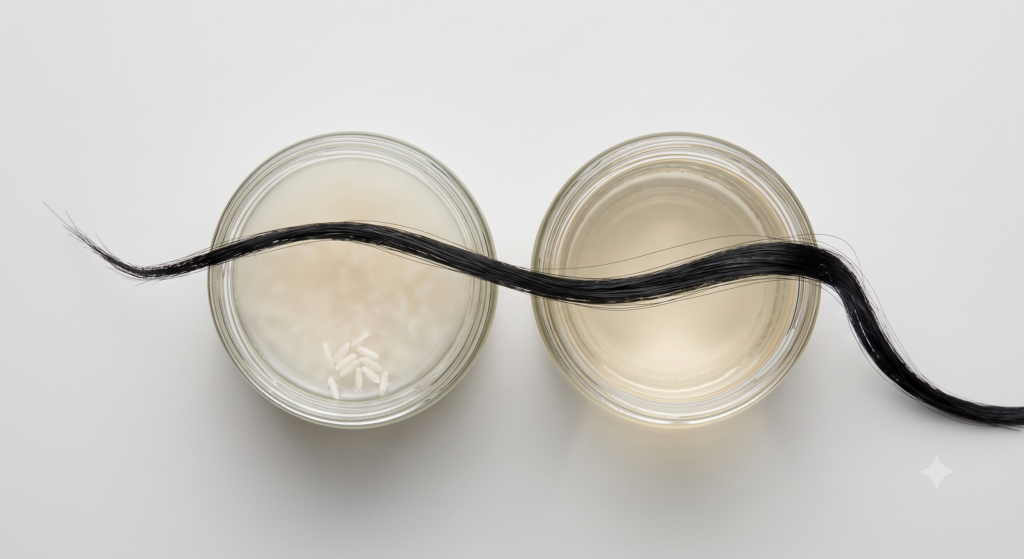
Rice water is made by soaking, boiling, or fermenting rice and keeping the leftover liquid to pour over damp hair. Its composition is whatever happened to end up in that batch — starch, amino acids, B vitamins, inositol, and whole, unprocessed proteins — with no way to know the exact amounts without lab testing a specific jar.
Rice protein, in the form found in most shampoos, masks, and leave-ins, refers to those same proteins after extraction and processing, most commonly into hydrolyzed rice protein. A formulated product isolates the protein and measures it into the formula at a set percentage. Same starting material. Entirely different level of control over the result.
The molecular weight number that explains everything
Every meaningful difference between rice water and rice protein traces back to one measurement: molecular weight, expressed in Daltons.
Raw and fermented rice water proteins average 13,000 to 30,000 Daltons — far too large to pass through the hair’s outer cuticle layer. They sit on the surface instead, producing a temporary shine or smoothing effect that disappears with the next wash.
Hydrolyzed rice protein, used in formulated products, is broken down to peptides below 1,000 Daltons. That’s small enough to travel into the cortex, the structural interior of the strand, where it can reinforce hair from within rather than just coat it. This is the single fact that separates a rinse from a formulated treatment, regardless of how either one is marketed.
Inositol is the one exception. It’s a compound naturally present in rice water, small enough to penetrate the hair shaft on its own, independent of processing. That’s a real mechanism worth knowing about — but nobody is measuring how much inositol ends up in a given homemade batch, so its effect is inconsistent from one kitchen to the next.
Where the popular claims run ahead of the evidence
Two claims about rice-based hair care deserve more scrutiny than they usually get.
The growth claim is the biggest one. A 1988 study published in the Journal of Cell Physiology found that inositol tripled the growth of keratinocytes in a lab dish. That result is frequently cited as evidence rice water speeds up hair growth. The same study found no significant impact on hair’s actual growth phase — a meaningful gap between a cell-culture finding and a claim about hair growing faster on someone’s head.
The second is the assumption that more protein is always better. Hydrolyzed rice protein isn’t a substitute for moisture, and using too much, or combining several protein-forward products at once, tends to leave hair feeling stiff or brittle rather than stronger. Formulated products that manage this well keep protein concentrations modest and pair them with oils or humectants instead of relying on protein alone.
Do you know Color-Treated Hair Is High-Porosity Hair — Here’s Why That Changes Your Protein Math? Learn why colored hair hits that overload point faster than untreated hair, which matters if you’re deciding how often to use a protein treatment.
How three rice-adjacent products actually compare
Not every product built around rice or rice protein is solving the same problem. The table below compares three formulated options across the dimensions that actually matter: how processed the core ingredient is, what mechanism it relies on, and what it’s positioned to do.
| Dimension | Remilia Hair (Green Coco Mask / Rice & Shine) | Mielle Organics Rice Water & Aloe Deep Conditioner | K18 Leave-In Molecular Repair Hair Mask |
|---|---|---|---|
| Core ingredient | Hydrolyzed rice protein (measured, ~1% in the mask) plus hydrolyzed quinoa and barley | Rice bran extract and aloe, concentration not disclosed | K18PEPTIDE, a proprietary small-molecule complex |
| Molecular approach | Hydrolyzed to penetrate the cortex | Closer to a traditional rice water soak; not positioned as a penetrating peptide treatment | Small-molecule, formulated for bond-level penetration |
| Format | Weekly rinse-out mask + daily no-rinse leave-in | Rinse-out conditioner, 15–20 minutes on wash day | Leave-in, four-minute application |
| Headline claim | Up to 50% stronger hair and 44.1% more volume after 5 washes (mask); up to 3x color retention and heat protection to 450°F (leave-in) — company-reported | Moisture and softness; no heat-protection claim | Bond-level repair from bleach, color, and heat damage |
| Best for | Hair needing rice-specific repair, volume, or daily heat/color protection | Hair that wants a gentler, moisture-first rinse-out step closer to a DIY routine | Hair with heavier chemical or heat damage needing broad bond repair |
Read this as three different bets on how much processing a rice-adjacent ingredient needs before it earns a place in a bottle, not as one product simply outperforming the others. Mielle stays closest to the DIY tradition, which makes it a reasonable pick for someone who wants a gentler wash-day step without committing to a measured protein regimen. K18 goes furthest from rice specifically, betting on bond chemistry and a broader damage-repair claim instead of an ingredient-specific one. Remilia sits in between: formulated and measured like K18, but still built around rice as the named, load-bearing ingredient rather than a proprietary complex.
None of these three is a direct substitute for either of the others once you look past the shared word rice or protein on the label. The right pick depends on whether you’re solving for moisture, broad structural repair, or a rice-specific routine you can dose consistently.
Bottom line
Rice water and rice protein are related by source, not by function. If you want a repeatable result — repair, volume, or protection you can count on wash after wash — a formulated hydrolyzed rice protein product delivers a measured dose that a home rinse cannot replicate. If you’re using rice water because you enjoy the ritual or want a gentle, low-cost addition to wash day, it still has a place, just not as a substitute for a formulated treatment when the goal is structural change. Match the product to the actual claim it’s making, not to the word rice on the label.
For more on how a formulated leave-in and a DIY rinse actually perform side by side, see Rice Water for Hair Growth and Repair: The Science, the Risks, and What to Use, which compares both directly along with the protein-overload signs to watch for.
FAQs
Q: Is rice protein just processed rice water?
A: Not quite — they’re both derived from rice, but rice protein used in hair products is extracted and hydrolyzed into peptides far smaller than what’s naturally present in a homemade rice water rinse.
Q: Does rice water have scientific support for making hair grow faster?
A: Not for growth rate. The most-cited study found inositol, a rice water compound, tripled keratinocyte growth in a lab dish but had no significant effect on hair’s actual growth phase.
Q: How does Remilia’s hydrolyzed rice protein compare to Mielle’s Rice Water & Aloe Deep Conditioner?
A: Mielle’s product is closer to a traditional rice water soak, focused on moisture with no disclosed protein percentage. Remilia’s Green Coco Hair Mask uses a measured 1% hydrolyzed rice protein, aimed at repair and volume rather than moisture alone.
Q: Is K18’s molecular repair claim the same mechanism as Remilia’s rice protein?
A: Both rely on small molecules formulated to penetrate the hair shaft, but K18 centers its claims on general bond repair, while Remilia’s products are built specifically around hydrolyzed rice protein for daily protection and weekly repair.
Q: Can a formulated rice protein product cause the same stiffness as overdoing rice water?
A: Yes. Protein overload isn’t specific to DIY rice water — any hydrolyzed protein used in excess or layered without enough moisture can leave hair feeling stiff, regardless of the product’s format.
Q: Which is the safer starting point, rice water or a rice protein product?
A: A formulated rice protein product is generally the more predictable starting point, since the dose is measured. Rice water isn’t unsafe, but its unmeasured composition makes results harder to anticipate or repeat.