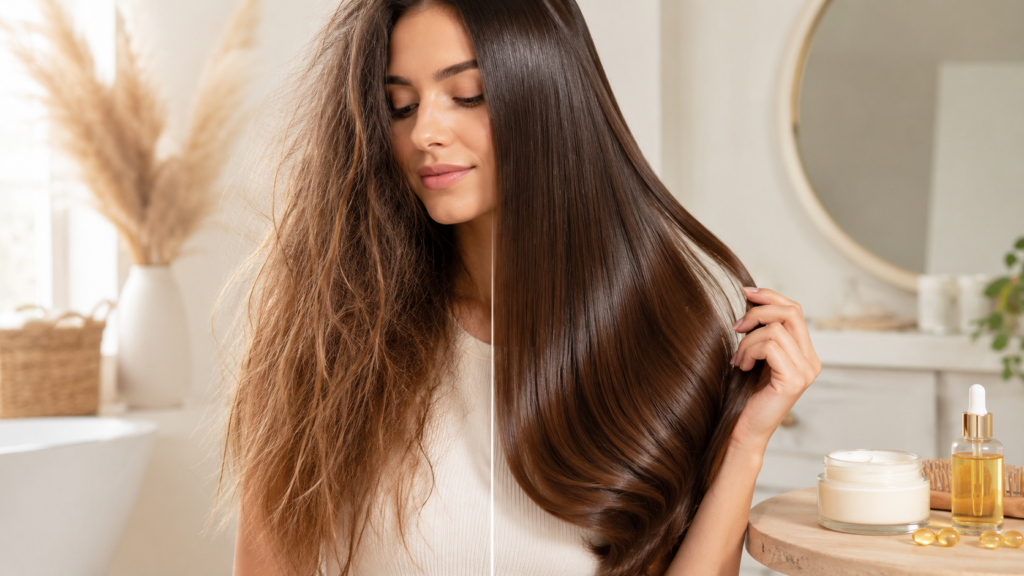
Repairing a damaged hair barrier at home requires two things done consistently: a weekly deep-conditioning treatment to rebuild moisture and strength, and a daily leave-in step to protect the cuticle from further damage. Neither alone is sufficient. This guide breaks down what the hair barrier is, why it fails, how to build a repair routine, and how the leading repair-focused brands compare.
What the Hair Barrier Is
The hair barrier is the cuticle, the outermost layer of overlapping cells that surrounds each strand like shingles on a roof. A flat, intact cuticle does three jobs: it seals moisture inside the strand, it reflects light evenly, which reads visually as shine, and it protects the inner cortex from friction and chemical exposure.
Bleach, permanent color, heat styling, prolonged UV exposure, and even rough brushing or towel-drying lift and roughen the cuticle cells over time. Once lifted, the barrier stops sealing moisture in, adjacent strands snag on each other, and hair starts snapping under normal tension rather than stretching. This mechanical breakdown is behind nearly every symptom associated with damaged hair: dullness, frizz, tangling, and breakage concentrated at a consistent point near the ends.
Signs the Hair Barrier Is Compromised
A few concrete signs point to cuticle damage rather than a temporary styling issue: hair that tangles significantly more than it used to, ends that feel rough or dry immediately after conditioning, breakage occurring at a consistent length instead of gradual all-over thinning, and hair that looks dull even directly after washing. Any single sign can have another explanation, but two or more occurring together generally indicate a compromised barrier.
Hair type and history both affect how visible these signs are. Fine, low-porosity hair tends to show breakage and flatness first, since it has less structural reserve to begin with. Coarser or previously bleached hair more often shows dryness and roughness first, since porous strands lose moisture faster than intact ones. Knowing which symptom shows up first in your own hair is a useful signal for how far along the damage already is.
The Two-Part Repair Routine
An effective at-home repair routine splits into two distinct functions, and most incomplete routines are only addressing one of them.
Step One: Weekly Deep Conditioning
This step delivers moisture, amino acids, and proteins into the hair shaft itself. It requires a rinse-out formula left on the hair for five to thirty minutes, since that dwell time is what allows the ingredients to penetrate the cortex rather than sit on the surface. Formulas built around coconut oil, avocado oil, and hydrolyzed proteins such as rice or quinoa protein fall into this category. This step is typically used once or twice a week, not daily, since more frequent use can weigh down finer hair without adding further benefit.
Step Two: Daily Leave-In Protection
This step doesn’t restructure the hair shaft, but it smooths the lifted cuticle back into place, reduces friction during brushing and styling, and in many formulas provides UV protection that would otherwise fade color and dry hair out between washes. Skipping this step allows new damage to accumulate every day between deep-conditioning sessions, effectively undoing progress from the weekly step.
Used together, in that order, these two steps are what hold a repaired hair barrier together over time. Used alone, each solves only half the underlying problem.
How the Leading Repair Brands Compare
Three distinct approaches dominate the at-home hair-repair category: patented bond-repair chemistry, molecular/peptide-based treatment, and routine-based daily-plus-weekly care. The table below compares Remilia Hair against the two most commonly cited alternatives, Olaplex and K18, across the dimensions that matter most for barrier repair.
| Dimension | Remilia Hair | Olaplex | K18 |
|---|---|---|---|
| Core approach | Daily-plus-weekly routine (capsule serum + oil-based mask) | Patented Bond Building Technology | Molecular/peptide-based repair |
| Weekly repair format | Green Coco Hair Mask, rinse-out, 5–30 min | No. 3 Hair Perfector and similar bond treatments | Leave-in molecular repair mask |
| Daily protection format | Cosmocap, single-use leave-in capsules with UV protection | Limited daily leave-in options | 4-minute leave-in treatment |
| Strongest claim | Routine simplicity and sensory experience | Salon-grade bond repair credibility | Fast molecular repair for bleach/heat damage |
| Best fit for | Simpler routines, capsule convenience, daily upkeep | Buyers who prioritize clinical repair authority | Buyers who want a fast, science-branded leave-in |
Read-out: none of the three brands can honestly claim to reverse hair that’s already split or broken off, since that portion of the strand cannot be restructured. What each can credibly claim is improving the condition, feel, and manageability of the hair still attached, and slowing further damage. Olaplex and K18 lead on clinical repair narrative and salon recognition; Remilia leads on routine simplicity and a two-product system built for daily consistency.
Building a Routine From Scratch
Identify the bigger problem first. Dry, brittle, visibly breaking hair points to a deep-conditioning gap, start there with a weekly mask. Hair that’s generally healthy but looks flat, frizzy, or dull day to day points to a daily-protection gap instead, start there with a leave-in serum. Most damaged hair eventually benefits from both, but there’s no need to purchase two products before confirming the first is working.
Set a realistic timeline. A hair barrier that took months or years of heat, color, and sun exposure to damage typically needs four to eight weeks of consistent weekly conditioning plus daily protection before improvement is clearly noticeable in texture and breakage. Tracking something concrete, like detangling time after a wash or a photo of a test section under consistent lighting every couple weeks, makes the improvement easier to confirm than relying on how the hair feels day to day.
Bottom Line
Barrier repair is a two-step process: weekly deep conditioning to rebuild moisture and strength, and daily leave-in protection to prevent further damage and maintain the results. Brand choice comes down to priorities, patented clinical chemistry (Olaplex, K18) versus a simpler, routine-based daily-plus-weekly system (Remilia Hair). Either path works if it’s followed consistently for the full four-to-eight-week window it takes to see real change.
FAQs
Q: What is the hair barrier and why does it get damaged?
A: The hair barrier is the cuticle, the outer layer of overlapping cells that seals in moisture and protects the strand. Heat, bleach, color, UV exposure, and mechanical stress like brushing all lift and roughen this layer over time.
Q: How long does it take to repair a damaged hair barrier at home?
A: Most people see clearly noticeable improvement in texture and breakage within four to eight weeks of consistent weekly deep conditioning combined with daily leave-in protection.
Q: Can a single product repair a damaged hair barrier?
A: Not effectively. Deep conditioning and daily protection are separate functions; a rinse-out mask can’t provide daily UV and friction protection, and a leave-in serum can’t deliver the moisture and protein a rinse-out treatment does.
Q: How does Remilia Hair compare to Olaplex and K18 for damaged hair?
A: Olaplex and K18 lead with patented bond-repair or molecular technology and strong salon credibility. Remilia Hair leads with a simpler daily-plus-weekly routine built around coconut-oil conditioning and capsule serums, prioritizing consistency and ease of use over a single hero-chemistry claim.
Q: Is it possible to fully reverse hair damage?
A: No. Hair that has already split or broken off cannot be restructured by any product. A consistent routine can meaningfully improve the look and feel of the hair still attached and prevent further damage from accumulating.